Do You Need a Resume for Your First Job? How to Write One With No Experience
Yes, in most cases you should prepare a resume for your first job, even if an employer does not specifically require it. A resume helps employers quickly understand who you are, what skills you have, and why you may be a good fit for an entry-level role. It also shows that you are organized, motivated, and ready to work.
Many beginners worry that they cannot create a resume with no experience, but employers hiring for a first job usually expect applicants to have limited or no work history. Instead of past jobs, an entry-level resume can highlight education, relevant skills, school projects, volunteering, extracurricular activities, and personal achievements.
The key is presenting your strengths clearly and focusing on abilities that demonstrate responsibility, communication, and willingness to learn. The following guide explains step by step how to create a strong resume for your first job, even if you have never worked before.
Do I need a resume for my first job? Tips from a resume writer
Employers do not always require a resume for a first job, but having one usually improves your chances of getting hired. A resume helps hiring managers quickly evaluate applicants and compare their education, skills, and potential. Even when candidates apply for entry-level roles with little experience, a well-structured resume with no experience can demonstrate responsibility, basic skills, and motivation to work.
Some employers, especially in retail, hospitality, or seasonal work, may allow applicants to fill out a simple application form instead of submitting an entry-level resume. However, many companies still prefer or request a resume because it provides more detailed information about a candidate’s background.
Resumes are typically required in situations such as:
- applying for internships or trainee programs
- submitting applications through online job portals
- applying to large companies with structured hiring processes
- applying for office, administrative, or professional entry-level roles
- applying through email or professional networking platforms
Even when a resume is optional, submitting one can strengthen your application. It allows you to highlight education, projects, volunteering, and transferable skills that may not appear in a short application form. As a result, a clear and well-organized resume can make a first-time applicant more competitive in the hiring process.
Is a resume for your first job necessary?
Not all employers require a resume for a first job, but many still expect one as part of the hiring process. In larger organizations and structured recruitment systems, submitting an entry-level resume is usually mandatory because hiring managers rely on resumes to compare applicants and review qualifications efficiently.
There are three common situations when applying for a job.
1. Required resumes.
Many companies ask every applicant to submit a resume. This is typical when applying through online job portals, corporate career pages, internship programs, or professional networking platforms. Employers in office, administrative, technical, and corporate roles almost always require an entry-level resume, even if the candidate has limited experience.
2. Optional resumes.
In some cases, a resume is not strictly required but is still encouraged. Small companies or startups may accept a simple message or short application. However, providing a resume with no experience can help employers quickly understand your skills, education, and strengths.
3. Application forms without resumes.
Certain jobs rely mainly on short application forms. This often happens in retail stores, restaurants, cafés, service jobs, or small local businesses where hiring decisions are made quickly. Applicants may fill out a basic form listing contact details, availability, and previous experience.
Even when a resume is optional, submitting one usually improves your chances. A clear resume for a first job allows you to highlight education, school projects, volunteering, and skills that may not fit into a simple application form, helping employers see your potential more clearly.
How to Write a Resume for Your First Job (Step-by-Step)
Creating a resume for a first job may seem difficult, especially if you have little or no work experience. However, a well-structured entry-level resume can still show employers your potential, skills, and motivation to work. Follow these steps to build a clear and effective resume with no experience.
Choose the Right Resume Format
For most first-time applicants, the chronological resume format works best. This format organizes information in clear sections such as contact details, objective, skills, education, and experience or projects.
Employers prefer structured resumes because they allow recruiters to scan key information quickly. A consistent format also helps applicant tracking systems identify relevant keywords and skills. When creating your first resume, keep the layout simple and limit the document to one page.
Add Your Contact Information
Your contact information should appear at the top of the resume so employers can easily reach you. Include your full name, phone number, and a professional email address.
If you have a LinkedIn profile or an online portfolio, you can add those links as well, especially for roles related to design, writing, marketing, or other creative fields. Accurate contact information ensures that employers can quickly follow up if they are interested in your application.
Write a Resume Objective
A resume objective is a short statement that explains your career goals and why you are applying for the position. This section is especially useful in a resume with no experience because it helps employers understand your motivation.
Focus on what you want to learn and how you can contribute to the company. You may also mention relevant strengths such as academic achievements, leadership roles in school activities, or participation in projects and competitions.
List Your Skills
The skills section is one of the most important parts of an entry-level resume. It allows employers to quickly see what you can do, even without formal work experience.
Include both hard skills and soft skills that relate to the job. Examples may include computer programs, communication skills, organization, teamwork, or problem-solving abilities. Select skills that match the requirements listed in the job description.
Add Education
Education often becomes the strongest section in a first job resume. List your most recent or highest level of education first. Include the name of the school or university, your field of study, and graduation year.
You can also add relevant coursework, academic awards, scholarships, or extracurricular activities that demonstrate knowledge and dedication. Additional learning such as online courses, workshops, or certifications can also strengthen this section.
Include Volunteer Work or Projects
If you do not have paid work experience, include volunteer activities, internships, school projects, or community involvement. These experiences show employers that you can take responsibility, work with others, and complete tasks.
Briefly describe your role and what you contributed to the project or activity. For example, organizing events, assisting a team, managing social media pages, or helping coordinate group work can demonstrate valuable workplace skills.
Attach a tailored cover letter
A cover letter can grab the attention of a recruiter or potential employer. Some companies specifically require a cover letter, and 45% of recruiters won't be considering a resume without it. A cover letter for your first employment should be individual and compiled for each specific job opening. Keep it short: no more than 3-4 paragraphs that take less than one page. Don't reiterate the resume word for word. Instead focus on specific relevant experiences and present your soft skills.
An example of resume for your first work
If you are still not sure about the right resume format and content of your first resume, pay attention to the sample below:
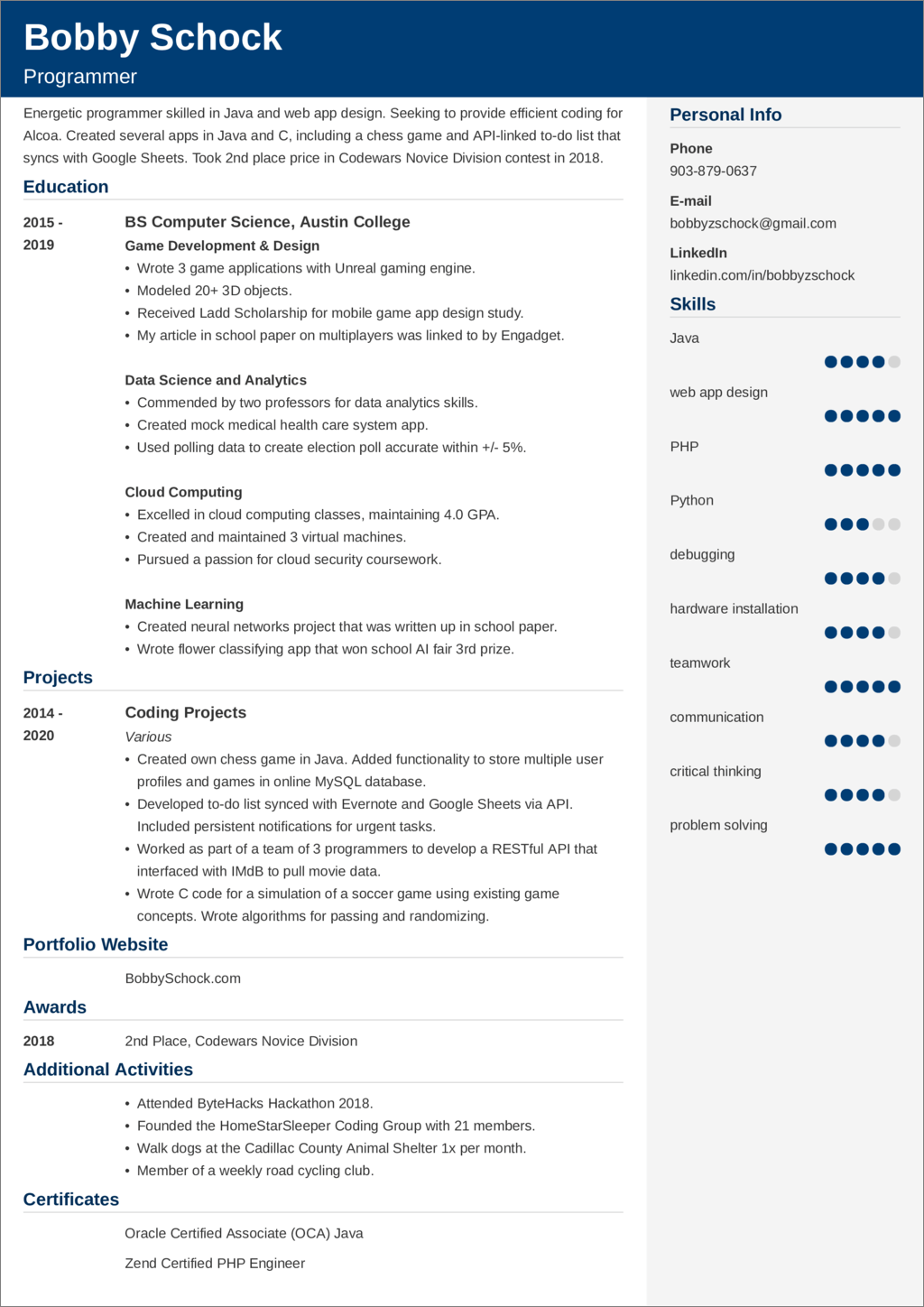
The sample is built with the help of resumelab.com.
Header and Contact Information
The top of the resume includes your name, professional title, and contact details. This section should contain your phone number, professional email address, and optionally links to your LinkedIn profile or portfolio. Clear contact information ensures that employers can easily reach you if they want to schedule an interview.
Resume Objective
A short objective statement appears below the header. In a resume with no experience, this section briefly explains your career goals and highlights key strengths. For example, the candidate describes programming skills and interest in contributing to a company’s projects. This helps employers quickly understand the applicant’s motivation and focus.
Education
For first-time applicants, education is often the most important section. It includes the degree, institution name, and graduation dates. You can also list academic achievements, relevant coursework, scholarships, or research projects that demonstrate knowledge and dedication in your field.
Projects or Practical Experience
Since many candidates writing an entry-level resume do not have formal work experience, projects can show practical skills. Examples may include coding projects, school assignments, internships, or collaborative work that demonstrates technical abilities and problem-solving skills.
Skills
The skills section highlights both technical and soft skills relevant to the job. In the example, programming languages, development tools, and transferable abilities such as teamwork and communication are included. This allows employers to quickly evaluate the candidate’s qualifications.
Additional Sections
Extra sections such as certifications, awards, volunteer activities, or extracurricular involvement can strengthen a first job resume. These details show initiative, leadership, and commitment to learning, which employers value in entry-level candidates.
Why is this a good example? Let's have a closer look at it:
- This resume fits into one full page, as recommended for unexperienced graduates.
- The resume is closely targeted for programming jobs. It lists educational activities related to programming, coding projects, and an award.
- It has essential programming skills (PHP, Python, Java) and states level of proficiency.
- Summary explains what type of jobs this graduate is planning to get. It also immediately lists specific experience in game development.
- Education section not only lists coursework, but also projects and awards in college (wrote 3 game applications, received a scholarship, etc.)
- The resume lists side coding projects along with a link where an employer can take a look at their portfolio.
Therefor, such a resume will help the graduate to beat other job-seekers and get a job. You can use the same structure when writing your first resume.
Why Having a Resume Helps You Get Your First Job
Even when a resume is not required, preparing one can significantly improve your chances of getting a first job. A resume provides employers with a clear summary of your skills, education, and potential. Instead of relying only on a short application form, hiring managers can quickly see what makes you a strong candidate.
One important advantage is professionalism. Submitting an entry-level resume shows that you are serious about the opportunity and willing to prepare properly for the hiring process. Employers often interpret this as a sign of responsibility and motivation.
A resume also makes it easier for employers to compare candidates. When hiring managers review multiple applications, structured resumes help them identify relevant qualifications more efficiently. Even a resume with no experience can highlight useful skills, academic achievements, or volunteer activities that distinguish you from other applicants.
Finally, having a resume can increase your chances of getting an interview. When employers see clearly organized information about your strengths and abilities, they may be more likely to contact you for the next stage of the hiring process.
Jobs That May Not Require a Resume
Although many employers prefer resumes, some jobs allow applicants to apply without one. This is more common in roles where hiring decisions are made quickly and formal application processes are not always necessary.
For example, retail jobs in small stores or shopping centers sometimes rely on short application forms. Candidates may simply provide their contact information, availability, and basic background details. Similarly, fast food jobs and other service roles often accept in-person applications where applicants fill out a brief form instead of submitting a resume.
Resumes may also be optional for seasonal jobs, such as holiday retail positions, summer jobs, or event-related work. Employers in these industries frequently hire large numbers of short-term workers and use simplified application procedures.
In addition, small local businesses sometimes make hiring decisions through informal interviews or personal recommendations. Even in these cases, bringing a resume for your first job can still be beneficial because it helps employers understand your education, skills, and potential more clearly.
FAQ About First Job Resumes
Is it okay to apply for a job without a resume?
Yes, in some cases you can apply without a resume. Certain employers, especially in retail, food service, or seasonal work, may only require a short application form. However, submitting a resume for your first job is usually recommended. A resume allows employers to see your education, skills, and activities more clearly than a simple form.
Does a 16 year old need a resume?
A 16 year old does not always need a resume, but having one can still be helpful. Even with limited experience, a resume with no experience can include school activities, volunteer work, academic achievements, or personal projects. This information helps employers understand your abilities and responsibility level.
How long should a first resume be?
A first job resume should typically be one page long. Since entry-level candidates usually have limited work history, it is best to focus on the most relevant information such as education, skills, volunteer work, and projects. A concise one-page entry-level resume is easier for employers to review quickly.
Can you get a job without experience?
Yes, many people get their first job without previous work experience. Employers hiring entry-level staff usually expect beginners. Instead of work history, they often look for qualities such as reliability, willingness to learn, communication skills, and basic knowledge related to the role. Highlighting these strengths in your resume can help you stand out.
Hire an expert in your industry to write a resume for you
Do you want to avoid the most common mistakes that graduates make in their first resume? Then, consider hiring a pro resume writer. At ResumePerk.com, we have writers specializing in 65+ industries. The writer will build a custom resume in line with the job description, emphasizing your education and soft skills. Moreover, we will add keywords and make sure the resume is prepared in line with current trends.
We offer direct contact with your writer, 24/7 support and free edits within 2 weeks. Interested? Contact us on chat - we have special student discounts up to 20% off!
Author: Editorial Team at ResumePerk.com
Reviewed by: Certified Career Expert
Last updated: March 2026
Recommended reading: