Creating Your First Vita
Whether you need a bio to land a temporary role or to launch your career after graduation, developing the first profile in your life can be stressful. If you haven’t had a position before, you might be seriously confused about what to include and how to organize the document in general. However, crafting a great CV is manageable – as long as you know the rules.
After reviewing over 1700 portfolios across the US, I’ve identified that generating a CV for the first position is important because it helps demonstrate the candidate's skills, experience, and achievements. The purpose of a profile is to show the employer that the applicant is the best fit for the role.
Continue reading to find out how to set your mind to writing and what information will make your profile shine or checkHow to End a Letter Effectively if you are landing a new role.
Things to keep in mind when generating your first vita
CV professionals of Resumeperk.com insist that the right mindset is more important than ever when you create your first document. Despite the fact you’re unexperienced, a profile should be your marketing document that points out at your strengths and accomplishments. An excessive shyness can cost you a chance for an interview!
Don’t worry because of lack of experience. Yes, the hiring managers prefer experienced candidates. However, as they are willing to hire students and graduates, they assume that applicants might not have experience at all. Just take the most out of your background – we’ll recommend how to do this below.
Don’t lie! Avoid mentioning the experience that you never had to get your portfolio noticed. The background check will reveal that you’ve stretched the truth, and you’ll lose the chance for an employment with this employer. Read more about the consequences of CV lies.
7 tips to creating a vita for first role
Why not use a college student bio builder? Tips
Dozens of online portfolio builders are advertised these days. Although these services offer you to create a beautifully designed document, they come with a bunch of disadvantages. Firstly, they don’t improve your writing – and if your CV is poorly developed and contains mistakes the hiring managers won’t care much about its cool looks. And secondly, the special software which scans CVs in big companies might not read such Curriculum Vitae correctly. One way or another, you’ll need a traditional text profile crafted in accordance with the modern requirements.
If you want to find out more about bio builders and give them a short, read our review of the most popular ones here: https://resumeperk.com/blog/best-online-tools-to-create-a-modern-resume.
Browse student portfolio examples first job
To gain a clear understanding of how your bio should look like, look for the samples of student profiles at our website or via Google. Pay attention to the sections that other applicants include, the fonts they opt for and the way they describe themselves. However, don’t copy and paste the text from someone’s resume – it’s a big no-no!
Brainstorm before you start writing
Before you actually create a .doc file called ‘resume’, you will want to make a number of preparations that will help you produce a more effective document:
- Set clear employmentâ goals. Don’t say that you just want any duty. Decide on the company size, industry, location and other parameters before creating a Curriculum Vitae. A CV created to fit the specific type of employment gets more feedback and interview calls than just a generic description of your skills and experiences.
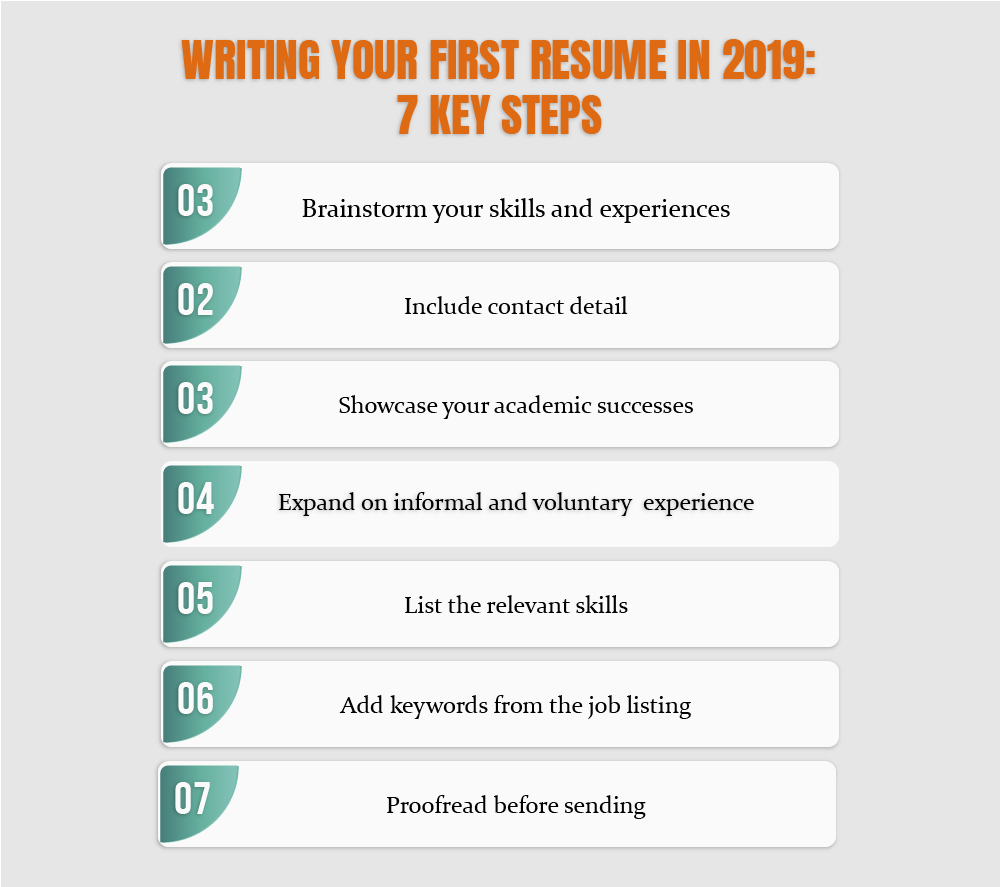
- Learn the employers’ expectations. Check out a number of relevant job postings, learn the frequently mentioned requirements or skills and create the list of most popular keywords. As you start writing, you’ll be using them to make sure your vita passes an ATS selection.
- Outline your skills and experiences. Point everything you’ve done, achieved and the skills you’ve gained on the sheet of paper. Include any information, from babysitting a neighbor’s son to winning the second prize in the essay contest. Later on, you’ll pick the experiences worth being mentioned on your profile from this list.
- Remove the unprofessional information from your social media. Everybody knows that social media can ruin career – party pictures, alcohol abuse, aggressive comments don’t help create a professional image.
Include the must-haves of professional college student resume no work experience
Make sure your resume contains the essentials such as full name and contact details. Proofread this information carefully – you won’t believe it how many people lose their interview chances due to a misspelled phone number. E-mail address should look professional – “johnmomoa@gmail.com” is a better option than “hotkiss2001@icloud.com”.
Apart from contact details, mandatory resume sections also include Education and Skills. Although career summary is considered optional, we strongly recommend that you include it as well.
List both formal and informal work experience
So, you probably haven’t had a ‘serious’ job before (maybe, this is exactly what brought you here). In this case, listing any experience you had is considered appropriate. Volunteering and internship roles are perfect to include as a relevant experience – be detailed about your responsibilities and showcase any specific results you’ve managed to accomplish. If you don’t have experience of this kind, occasional activities such as mowing the lawn for your neighbor or helping with the garage sale can show such skills as dependability, teamwork and time management.
Pro tip: if you have no experience at all and struggle getting interviews, experts recommend that you join a voluntary or community organization so you could put something to your Experience section.
Highlight your academic successes
Until you gain relevant experience, your education is the biggest asset for the resume. Including the school name, degree and graduation year is a must. However, don’t be too brief – you probably have done a plenty of things in school or university that can set you apart. Firstly, list your GPA (if high) and significant university awards such as Dean’s list. Secondly, you can provide project-specific examples, classwork you’ve done or relevant courses taken to show you’re good with theory. Thirdly, don’t forget the extracurricular activities – your athletic pursuits, leadership position in a sorority, or an editor’s position in the university or school newspaper will highlight your versatility and demonstrate the skills that employer value.
Don’t forget that your degrees should go in a reverse chronological order, and if you proceeded to the college or university (even if you haven’t completed a degree yet), you can skip the high school information.
Always follow the employer’s directions
Employers who post positions organize their hiring processes differently. That’s why you need to check the job posting for a specific instruction on how to apply. For example, you might be asked to attach a bio in DOC or PDF format, to apply with a single Curriculum Vitae or a cover letter as well. Some companies will expect your application via email, while others will ask to fill out the form on the corporate website. Don’t ignore these instructions, otherwise your document won’t be considered.
Since you haven’t received a role offer before, remember the important questions you should ask before accepting a job offer.
Takeaway: Remember the essentials of high school vita with no work experience
- Cross out any personal pronouns (I, me, my) and write your profile in third person.
- Use strong action verbs: Authored, Developed, Organized, and more. You can get some inspiration here
- Your optimal bio length is one page. Two pages are for experienced professionals and mid-level managers. Three pages are for CFOs and university teachers.
- Watch the tenses. For your past experiences and activities, use past tense.
- Name the file as “FIrstname_Lastname_Resume.doc”. You can send the document both as DOC and PDF, depending on what the employer asks for.
- Use font that is big enough. 11-12 pts work great.
How to make a portfolio for first job high school student?
So, how do you make a profile that will gain the hiring manager’s approval? The key principles of bio generation for newbies are outlined above. However, your first bio is unlikely to be a success – best vitas are created through trial and error method.
Do you need a work ASAP and have no time to compose a bio and discover the recipe for making it interview-winning? Or, you’ve followed the above guidance but the vita doesn’t seem to work? In this case, you might benefit from professional profile help. A professional writer will take on all your CV worries so you could focus on the interview preparation – for example, revise how to dress for work interview.
If you're starting your career, getting resume help in Houston can make your first application much stronger.
How student services bio can help you land a job?
At Resumeperk com, we specialize in creating strong profiles that show the candidates in the most favorable light. Since you’re a student or graduate, our author will focus on your aptitude, potential, impressive educational pursuits and the set of skills that are in demand with employers. Whether you look for a possition to make some extra cash or want to start a career, you can get a CV generated by professional especially for you. We can also edit your old document and fix the mistakes which prevent you from getting interviews. If you evade crafting your portfolio, curriculum vitae or covering letter, contact us and get everything developed for you in just one day!
- How To Clean Up Boring And Lengthy Writing
- Content Writing Tips For Beginners
- How To Update A Resume - 12 Tips From Resume Update Services
Author: Editorial Team at ResumePerk.com
Reviewed by: Certified Career Expert
Last updated: December 2025